
Before & After Resume
At a glance, this resume looks decent. But at ResumePro, we don’t strive for decent. We strive for exceptional.
Let’s look at this resume’s weaknesses, then below we’ll look at all the ways ResumePro improved it.
Before
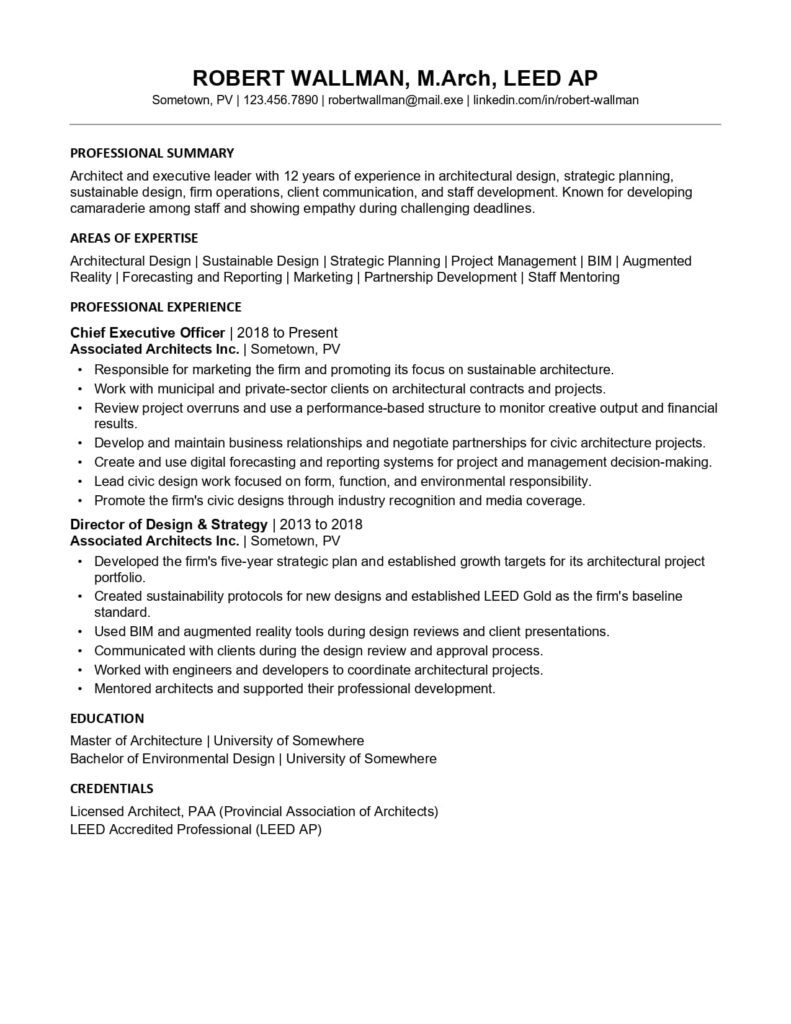
❌ PROFESSIONAL SUMMARY is largely meaningless. It is a collection of claims that, though perhaps true, carry no weight without proof. The place for claims is in the Experience section where you can give the proof.
❌ AREAS OF EXPERTISE is also meaningless, and often irrelevant. Even when your “areas of expertise” are relevant to the role you’re applying for, they need to be described and proven in the Experience section, not listed randomly like more claims.
❌ PROFESSIONAL EXPERIENCE: this section lacks any real meaning. It fails to answer the question recruiters and hiring managers ask: “So what?” It says what was done, but fails to describe how it was done, why it was done, what impact it had, and/or what resulted. It is just a collection of job duties.
❌ Formatting: it’s lazy. Line spacing is too tight, and yet there is plenty of unused white space that should have been used to provide “breathing space” in the body of the resume. And those one-line descriptions with the final word landing on the second line is really lazy. They should have used their word processor’s formatting options to avoid these kinds of unnecessary irregularities.
Recruiters don’t read, they scan. Make your resume open, spacious, easy and fast to scan!
Cramped line spacing and other formatting inconsistencies are distracting for the reader. When the reader is spending an average 10 seconds scanning your resume looking for a reason to spend one more second on it, you don’t want to distract them. Keep formatting consistent.
The purpose of this Before & After is to prove our claims. It’s fine to say we are expert resume-writers, and even to give samples, but we want you to see the before version so you can gauge our resume-writing skill for yourself.
After
In this much-improved resume, we see how the applicant almost comes to life on the page! This is how we deliver the evidence-based proof recruiters and employers need to see.
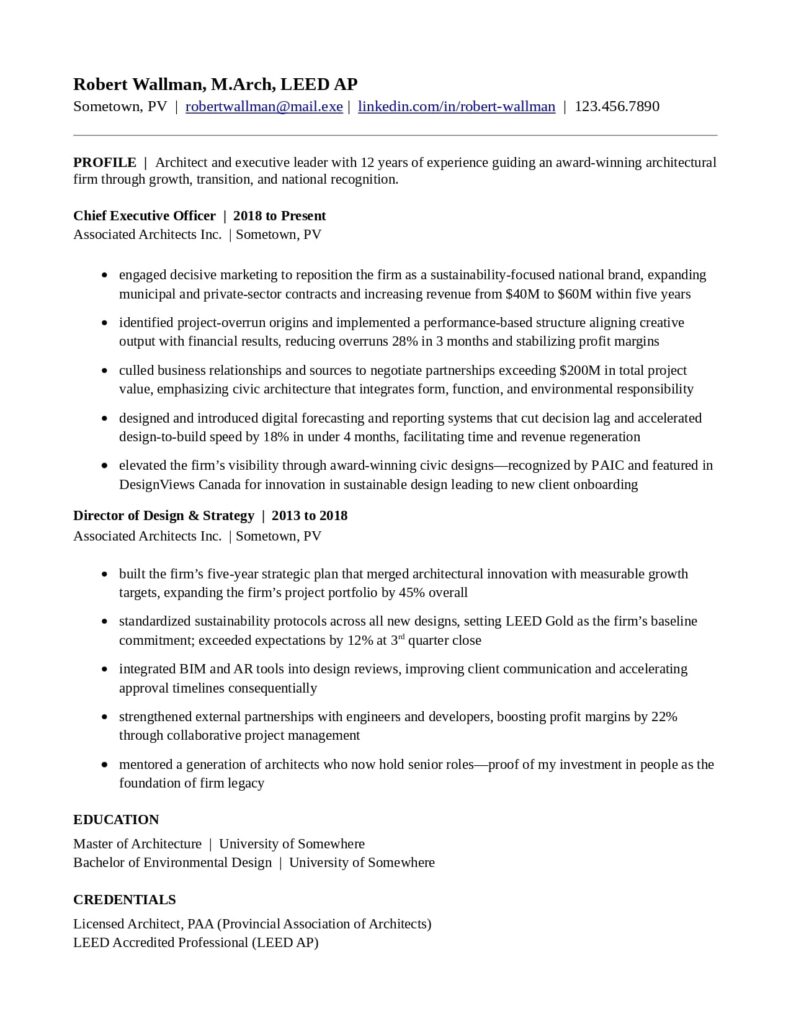
✔ PROFILE: A brief profile that responds directly to the job posting is the first thing you want the recruiter to see. (If you’re writing generic resumes, your Profile probably won’t respond decisively to anyone, so don’t write generic resumes.) The Profile, unlike the rambling and random Professional Summary, is not a series of claims. It is a concise description of how the applicant meets what the employer said they are looking for.
✔ This resume’s experience section—Career History—is not cramped for the sake of giving a bunch of unnecessary job duty descriptions. It is open and easily scannable. It’s a recruiter’s dream resume.
✔ Note how each work-activity description includes what the applicant did, how he did it, and what resulted. This is the formula for providing evidence!
✔ Formatting: This resume has plenty of white space, making the recruiter’s scan easy and fast. The spacing is ample and consistent. The recruiter will easily and quickly pick out the keywords they are looking for, and upon a thorough read, will clearly see this applicant’s accomplishments, value, and humanness.